The False Choice That Narrows a Public Argument
A false choice in public debate makes two options seem exhaustive. Learn to spot what the framing leaves out and ask sharper questions about the real decision.
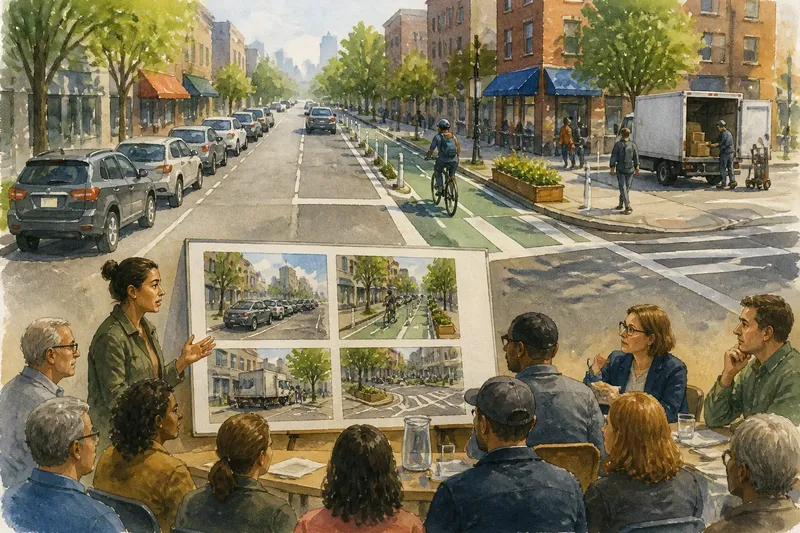
At a neighborhood meeting, a resident asks whether the town should keep a crowded parking lane or remove it for a protected bike lane. A false choice in public debate can hide other possibilities, such as shifting loading space, protecting only a dangerous intersection, or changing the plan’s hours.
Recognizing a false choice does not mean every proposal deserves endless delay or that compromise is always best. It means separating the decision itself from the boundaries someone has drawn around it. That distinction helps residents assess arguments without accepting a forced choice—or dismissing a genuine trade-off.
A forced choice makes a limited menu seem complete
A forced choice presents two options as if no meaningful alternatives exist. It often takes the form “either this or that”: either fund a service or lower taxes, either build a facility or protect open space, either support a proposal as written or oppose its purpose entirely.
The problem is not the word “either.” Some decisions really do require choosing between incompatible options. A council may need to select one site for a facility or decide which of two proposals to advance. The reasoning becomes misleading when a speaker presents a limited menu as the only menu without explaining why other paths are unavailable.
Look for the claim beneath the sentence. “We must choose between A and B” might mean a law allows only those choices, a deadline leaves no time for another design, or the speaker wants to keep the debate focused. Those are different claims, and each calls for a different response.
Short public arguments can conceal choices within each side
Public decisions are complicated, while short speeches, campaign messages, and meeting agendas reward simple contrasts. A two-sided frame is easy to repeat and can make a decision feel urgent. It may also organize a real conflict: residents can disagree about whose needs should take priority or who should carry a cost.
But the options themselves may contain further choices. “Keep the service” could mean preserving every feature or keeping its central function while changing hours or eligibility. “Cut the service” could mean ending it, reducing one part, or shifting responsibility elsewhere. Treating each side as a fixed block can conceal the decisions that matter most.
A forced choice can also turn a question about means into a test of loyalty. Someone who supports a service but questions its design may be portrayed as opposing the people it serves. Someone concerned about its cost may be described as indifferent to its purpose. Participants then spend energy defending their intentions instead of comparing workable choices.
Separate the goal, the options, and the claimed limits
To examine a public argument, pull apart three things that often get bundled together:
- The goal: Identify the outcome the proposal claims to pursue, such as safer crossings, reliable access, or a cleaner public space. If the goal is unclear, ask the speaker to state it before comparing plans.
- The options: Describe the specific actions being compared, including what each changes and leaves untouched. If the options are only labels such as “support” and “oppose,” ask what those positions would mean in practice.
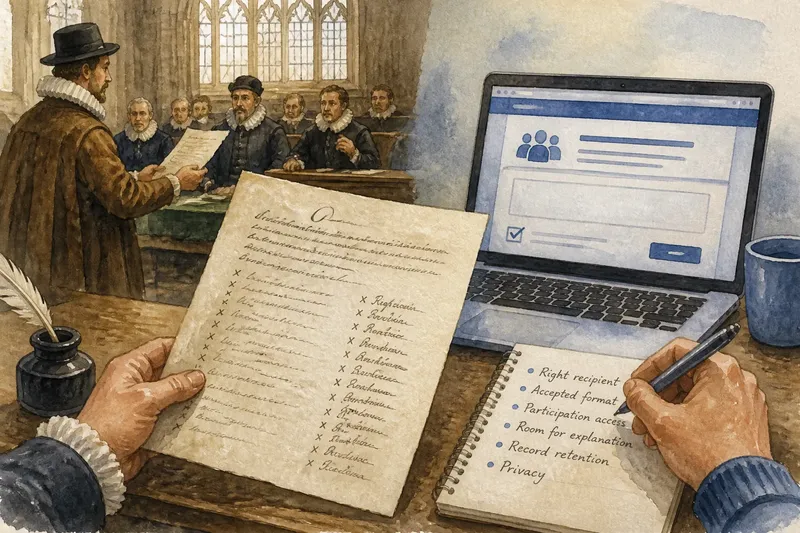
- The limits: Identify what makes the speaker say only these options are possible. If the limit is legal, financial, physical, procedural, or political, ask what it rules out; if no limit is named, treat the menu as incomplete pending an explanation.
Then ask whether the stated limits rule out alternatives or merely make them less convenient. A rule restricting how a site may be used can narrow the available choices for a concrete reason. A preference for a simple message does not. Nor does saying another option would be difficult, unless the argument explains why that difficulty decides the issue.
Do not overcorrect. Spotting an omitted option does not make it workable, fair, or affordable. Finding another possibility begins the evaluation; it does not settle whether the proposal should change.
Compare concrete alternatives against the same decision
Start with the exact decision under discussion. Is the public being asked to choose a goal, approve a specific plan, allocate a limited resource, or authorize the next stage of a process? An alternative that fits one decision may not answer another. Changing a design may matter when selecting a plan, but not when a meeting is limited to deciding whether to study the issue.
Make the proposed options concrete. Replace “keep parking” or “build a bike lane” with descriptions of what would happen: which spaces, which block, and whether the change is permanent or a trial. The clearer the options, the easier it is to see what has been left out.
Then consider what kind of alternative could change the choice: a different location, a smaller scope, a phased approach, a combination of uses, or a change in timing. These are prompts for inquiry, not ready-made answers. An alternative matters only if it addresses the stated goal and can be assessed against the same constraints as the original choices.
Say a town is deciding between retaining all curbside parking on a busy block and removing it for a protected bike lane. Imagine, hypothetically, that the starting proposal removes every curbside space and provides protection along the full block. A resident asks whether loading could move to a nearby side street while protection is added only at the most exposed intersection. The town would then have to compare the original plan with this narrower design: identify which spaces change, determine whether the side street can serve loading, and assess what the intersection protection would cover. The result would be a clearer decision about the trade-off, not proof that the alternative is workable.
Compare alternatives on consistent terms. If one option is criticized for cost, consider the cost implications of the others. If the debate concerns who can use a service, apply that question to every option. Uneven comparisons can make a preferred choice look inevitable even after the menu has widened.
Some two-option decisions are genuinely constrained
A vote may concern one motion, a legal rule may require a particular form of decision, or a site may not fit two uses at once. In those situations, demanding an unlimited list of alternatives can waste time and obscure the immediate decision.
A real constraint should still be stated carefully. “We cannot do both in this location” is more informative than “there is no other way,” because it identifies what conflicts and where. The next question may be whether the location is fixed, whether the proposal can change, or whether the public is deciding something narrower than the whole issue.
A choice can be exhaustive at one level and incomplete at another. A vote may ask whether to adopt a plan as presented or reject it, while the broader policy discussion includes revisions, alternatives, and future proposals. A clear argument says what the vote would decide without pretending that it resolves every related question.
What questions clarify a forced-choice argument?
How can I tell whether the choices are exhaustive?
Ask what specific rule, resource, or deadline excludes other options. If the answer names a constraint, check whether it applies to the whole issue or only to the current proposal.
Does a false choice mean the middle option is best?
No. A third option may fail to meet the goal, shift burdens onto other people, or require resources that are unavailable. Its presence means it deserves assessment, not automatic preference.
What if a meeting allows a vote on only one proposal?
Keep the immediate procedure distinct from the larger debate. Clarify what a vote would authorize, ask whether amendments are allowed, and record which alternatives remain outside the motion; the chair or relevant public office can explain the rules.
How can I challenge the framing without sounding evasive?
Name the decision you understand, then ask one focused question about a missing possibility or claimed limit. For instance, ask what prevents the town from considering a loading area on the side street if the choice concerns a design for the block.
Keep the inquiry proportionate to the decision
Widening a debate can become its own form of evasion. If every proposed decision triggers a demand to reopen the entire subject, public bodies may be unable to act and residents may lose sight of what is actually being decided. It is not worth the effort to generate remote possibilities that do not fit the goal, constraints, or authority under discussion.
A more useful contribution is modest and testable: identify the decision, name the missing option, and ask what would rule it in or out. That gives other participants something concrete to answer while leaving room to conclude that the original two choices are the only viable ones.
The phrase “false choice” is most useful when it leads to sharper public reasoning, not when it becomes a label for any disagreement. Ask whether the options are exhaustive, what makes them so, and which omitted option would change the comparison. Those questions can reveal the real decision while respecting the possibility that no easy third path exists.