A Policy Aim Is Not Yet a Policy Design
A policy aim names the change people want; policy design shows who acts, which tools they use, and how trade-offs can be judged before adoption.

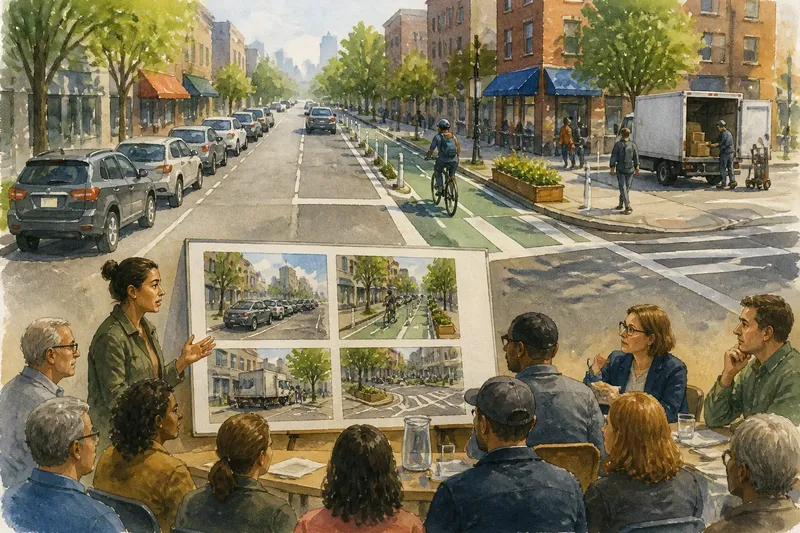
At a town meeting, a resident asks for safer streets near a school. The phrase is clear, but it does not yet tell anyone whether the town should change traffic rules, redesign an intersection, improve crossings, or combine those measures. A policy aim is not yet a policy design: the aim describes a desired condition, while design connects that condition to tools, responsibilities, and choices about competing needs.
Readers can assess a proposal more carefully by following its development over a week. This is not a substitute for the public process or technical work. It is a way to separate the promise from the mechanism and to notice what decision-makers still need to explain.
Start by translating the aim into an observable change
On the first day, write down the policy’s stated aim in plain language. Then ask what would be different in ordinary life if the aim were met. “Improve public safety” is too broad to assess on its own. “Make it easier for children to cross the streets around the school” points toward a setting and a change that people can discuss.
This translation matters because public goals often gather support from people who imagine different results. One person may hear “affordable housing” and expect more homes available to low-income renters; another may expect lower costs across the whole market. A proposal should clarify which result it is pursuing, for whom, and in what place or service.
Keep the wording modest. An aim is not evidence that a proposal will deliver the desired outcome. It is the standard against which the proposed actions can later be judged.
Look for the instrument that connects the goal to action
On the second day, identify the policy instrument: the means government proposes to use. Instruments can include a rule, a public service, a grant, a tax, a procurement decision, a public information effort, or a change in how an existing program is administered. The same aim can lead to very different instruments, each with distinct effects and demands.
For the school-street aim, a proposal might restrict vehicle access at certain times, fund crossing improvements, or ask the transportation department to revise signal timing. Those are not interchangeable. A restriction changes what drivers may do; funding assigns resources to a physical change; signal timing changes how road users share an intersection.
Ask why the chosen instrument is expected to influence the problem. If the proposal offers only a slogan, a list of broad activities, or an aspiration to “coordinate,” the missing connection deserves attention. The explanation need not predict every result, but it should make the logic visible: which action is expected to change what condition, and for whom?
Trace who has authority and who must carry out the work
On the third day, map the responsibilities. A proposal may assign a role to an elected body, a department, a regulator, a school district, a contractor, or residents. Those roles differ. The body that approves a policy may not be the body that administers it, and the organization expected to act may not control the resources or rules it needs.
Look for named responsibilities rather than vague phrases such as “the city will ensure” or “agencies should work together.” A workable design says who makes the decision, who performs the task, who pays or supplies staff, and who answers when implementation stalls. If two organizations share a duty, the proposal should make clear how their handoff works.
This is also where authority matters. A local government may want a change that depends on a state rule or a privately controlled road. The proposal should identify that dependency instead of implying that the local body can act alone. Where legal authority or technical requirements are decisive, the relevant public agency or qualified professional can clarify the limits.
Compare the trade-offs rather than expecting a cost-free choice
On the fourth day, list who may benefit, who may bear a burden, and what resources the proposal uses. Trade-offs are not proof that a policy is bad. They are part of the design, and making them explicit lets the public judge whether the expected benefits justify the burdens and whether the burdens can be reduced.
A change to street access, for example, may make a crossing calmer while complicating a delivery route or a caregiver’s drop-off. A grant program may help eligible applicants while leaving people who cannot meet its requirements without support. The useful question is not simply “Who objects?” but “What specific effect is at issue, how does the proposal address it, and what alternative would change that effect?”
Say a town proposes a timed street restriction outside a school. Imagine the draft explains the safety aim but says nothing about deliveries or residents with mobility needs. A reader could ask the transportation department to describe how access would work for those groups and whether a different boundary or exception is under consideration. The expected observable result is a clearer account of the design and its remaining choices—not proof that the restriction will succeed.
Do not spend much effort trying to identify one instrument that has no drawbacks. Public choices usually distribute benefits and burdens differently. Focus instead on whether the proposal names the affected groups, explains its rationale, and leaves room to address foreseeable problems.
Check what would count as progress and what would prompt revision
On the fifth day, look for a way to tell whether the policy is doing what its designers intend. That may involve a public reporting duty, a review point, a complaint process, or a stated condition for adjusting the policy. A measure should fit the aim: counting activities, such as signs installed, does not by itself show whether people can cross more safely.
Ask what information will be gathered, who will examine it, and how the result could influence a later decision. A proposal can be uncertain without being careless if it acknowledges what is not known and explains how officials will respond to what they learn. By contrast, an aim with no way to review implementation can remain a promise that is difficult to evaluate.
Be wary of demanding a single perfect indicator. Complex outcomes may need several kinds of evidence, including public feedback and administrative records. The point is to make the intended direction and the route for reconsideration clear.
What should a reader ask about a policy design?
How is a policy aim different from a policy instrument?
The aim names the condition public officials want to change; the instrument is the tool they propose to use. A proposal is easier to assess when it explains how that tool is expected to advance the stated aim.
Who should be responsible for implementation?
The proposal should identify the organization with authority to act and the people or bodies responsible for carrying out the work. When duties are shared, it should describe how decisions, resources, and accountability move between them.
How can I tell whether a proposal addresses trade-offs?
Look for a discussion of groups who may experience different effects, the reasons for choosing the proposed approach, and options for reducing avoidable burdens. Acknowledging a trade-off does not settle whether it is acceptable; it gives the public something concrete to judge.
What if the proposal does not say how results will be reviewed?
Ask who will check implementation, what information will be considered, and how officials could revise the approach. A review process helps distinguish a continuing public commitment from a one-time announcement.
Use the final days to follow the proposal into the public record
On the sixth day, compare the proposal’s summary with its fuller documents, such as a staff report, draft ordinance, budget note, or implementation plan. These materials may reveal responsibilities or constraints that a short announcement leaves out. If a term is unclear, ask the relevant office for a plain-language explanation rather than assuming the most favorable or alarming interpretation.
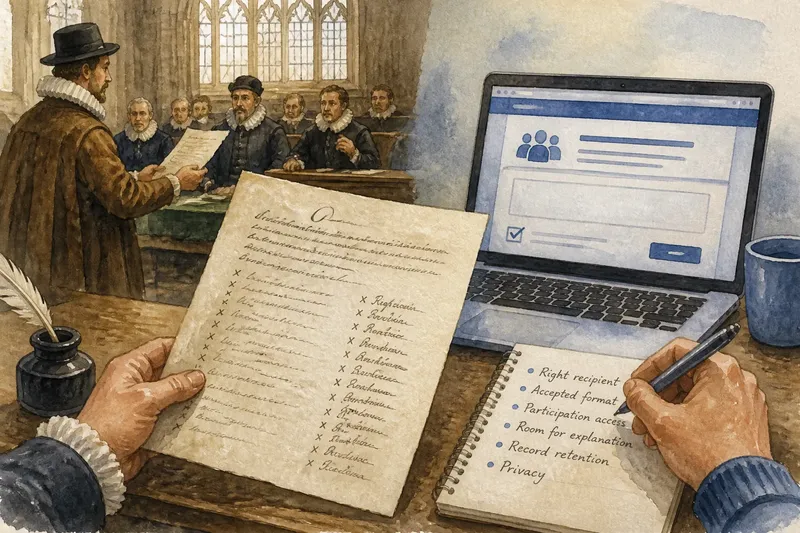
On the seventh day, prepare a focused comment. State the aim you understand, identify the instrument or responsibility that remains unclear, and ask a question that could be answered in the record. For instance: “The proposal aims to make crossings near the school safer. Which department will assess the access needs of residents and deliveries before the restriction is finalized?” A specific question is more useful than a general demand for action because it points to a design choice officials can address.
A policy aim can unite people while leaving its practical meaning unsettled. When you read the proposal as a chain—from desired change, to instrument, to responsible actor, to trade-offs and review—you can see where its reasoning is complete and where a public decision is still needed. That distinction helps keep debate focused on the choices that will shape the result.